
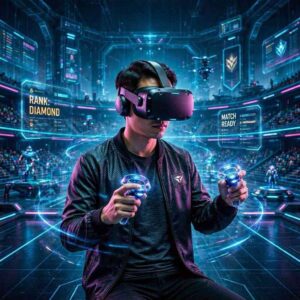
 Virtual reality has changed the way many people experience digital entertainment. Instead of simply watching a screen, players can now step inside immersive environments that feel more interactive and realistic. As virtual reality technology continues improving, competitive gaming has also started expanding into these digital spaces.
Today, many online games include virtual reality features or full VR gameplay systems. Players can explore detailed worlds, communicate with teammates naturally, and compete in immersive matches that feel very different from traditional gaming. This new style of gaming has also influenced how players rank up in Rocket League.
Competitive VR gaming requires more than quick reflexes. It combines physical movement, awareness, teamwork, communication, and adaptability.Players often feel as though they are travelling inside virtual reality worlds rather than simply controlling characters from a distance.
Online leagues inside VR games are becoming more popular as technology becomes more accessible. Competitive players now practice, train, and climb rankings in virtual spaces that simulate real-world movement and interaction. These experiences create entirely new challenges and opportunities for gamers.
At the same time, virtual reality gaming requires proper preparation. Hardware, physical comfort, internet stability, and safe gaming habits all play major roles in competitive performance. Players who understand how VR systems work can enjoy smoother experiences while improving their rankings more effectively.
How Virtual Reality Changes Competitive Online Gaming
Traditional gaming mostly relies on keyboards, controllers, and screens. Virtual reality changes this by placing the player directly inside the game world. VR headsets track movement, hand gestures, and positioning in real time, creating a more immersive experience.
This immersion changes how players approach competitive gameplay. In many VR games, physical movement matters just as much as button inputs. Players may need to dodge attacks, aim manually, swing objects, or move naturally within the environment.
Reaction time becomes more physical in VR gaming. Instead of only pressing keys, players often rely on body coordination and awareness. Competitive VR players train both mental focus and physical control to improve performance during matches.
Communication also feels different inside virtual reality. Many VR games use voice chat systems that simulate real-world positioning. Players hear teammates from specific directions, creating more natural teamwork experiences during online matches.
VR gaming environments often feel more intense than standard games. Because players feel physically present inside the world, competitive moments may feel more exciting and emotionally engaging. This immersion can improve focus but may also increase pressure during ranked matches.
Online game league systems in VR environments usually track rankings, match performance, win rates, and progression similarly to traditional competitive games. However, physical skill and spatial awareness often play larger roles in determining success.
Movement mechanics are especially important in VR competition. Players who understand efficient movement techniques often gain advantages during matches. Fast positioning, controlled movement, and environmental awareness can strongly affect ranking progression.
Physical endurance also becomes a factor. Long VR sessions can be tiring because players remain physically active while gaming. Competitive VR players often take breaks, stretch regularly, and manage energy levels carefully during practice sessions.
Virtual reality also changes how players learn strategies. Watching VR gameplay often provides a more realistic understanding of positioning and movement. Educational VR content allows players to study advanced techniques from first-person perspectives.
Social interaction feels more immersive in VR communities as well. Players often communicate through avatars, gestures, and body language. This creates stronger social presence compared to standard online gaming environments.
Some competitive VR games also include simulated sports, combat training, rhythm mechanics, or tactical teamwork systems. These experiences combine gaming strategy with physical coordination, creating unique ranking challenges.
As VR technology improves, more developers are building online league systems directly into their games. Competitive ladders, tournaments, and esports-style events are slowly becoming more common in the virtual reality space.
Important Tips for Ranking Up in VR Online Leagues
Players who want to rank up in online game league systems inside VR environments need both technical preparation and gameplay discipline. Virtual reality introduces additional factors that affect performance.
One of the most important steps is creating a safe play area. VR gaming requires physical movement, so players need enough open space to avoid collisions with furniture, walls, or objects. A clean and organized setup improves both safety and comfort.
Comfortable hardware setup also matters greatly. Proper headset adjustment reduces strain during long gaming sessions. Loose or poorly fitted headsets may cause discomfort, blurry visuals, or reduced focus during competitive matches.
Internet stability remains critical in VR gaming. Online VR matches require smooth communication between the headset, controllers, and game servers. Lag or connection interruptions can break immersion and affect match performance significantly.
Players should also maintain proper system performance. VR games often demand stronger hardware than traditional games because they render detailed environments at high frame rates. Low performance may cause stuttering or motion sickness.
Motion sickness is another important consideration for VR players. Some users experience dizziness or discomfort during fast movement inside virtual environments. Gradual adjustment, proper settings, and regular breaks help reduce these effects.
Physical fitness can surprisingly influence competitive VR performance. Since many VR games involve movement and coordination, players with better stamina and balance may perform more consistently during long sessions.
Practicing movement efficiency is also valuable. Wasting unnecessary motion can reduce reaction speed and increase fatigue. Skilled VR players often develop controlled and efficient movement patterns during gameplay.
Communication remains extremely important in team-based VR games. Clear voice coordination helps players react faster and organize strategies more effectively. Because VR environments feel more immersive, communication often feels more natural and engaging.
Players should also learn environmental awareness inside VR maps. Understanding space, cover positions, movement paths, and object placement helps improve survival and tactical decision-making during ranked matches.
Reviewing gameplay recordings can support improvement as well. Many VR systems allow players to record matches and analyze mistakes later. Watching movement patterns and positioning helps identify weaknesses that may not be obvious during gameplay.
Customization settings also affect comfort and performance. Adjusting movement sensitivity, turning systems, graphics settings, and controller layouts helps create more stable gameplay experiences.
Regular maintenance of VR equipment is important too. Clean headset lenses, charged controllers, and updated software help prevent technical interruptions during competitive sessions.
Players should also avoid overexertion. Competitive VR gaming can become physically demanding, especially during intense matches. Short breaks, hydration, and stretching support long-term comfort and focus.
Mental discipline remains just as important as physical skill. Players climbing online league rankings still need patience, strategy, communication, and adaptability. VR immersion does not replace the need for smart decision-making.